
What Is Step Aerobics? Benefits, Basics, and Getting Started
Learn what step aerobics is, the benefits, and how to begin step workouts at home.
Feb 5, 2026
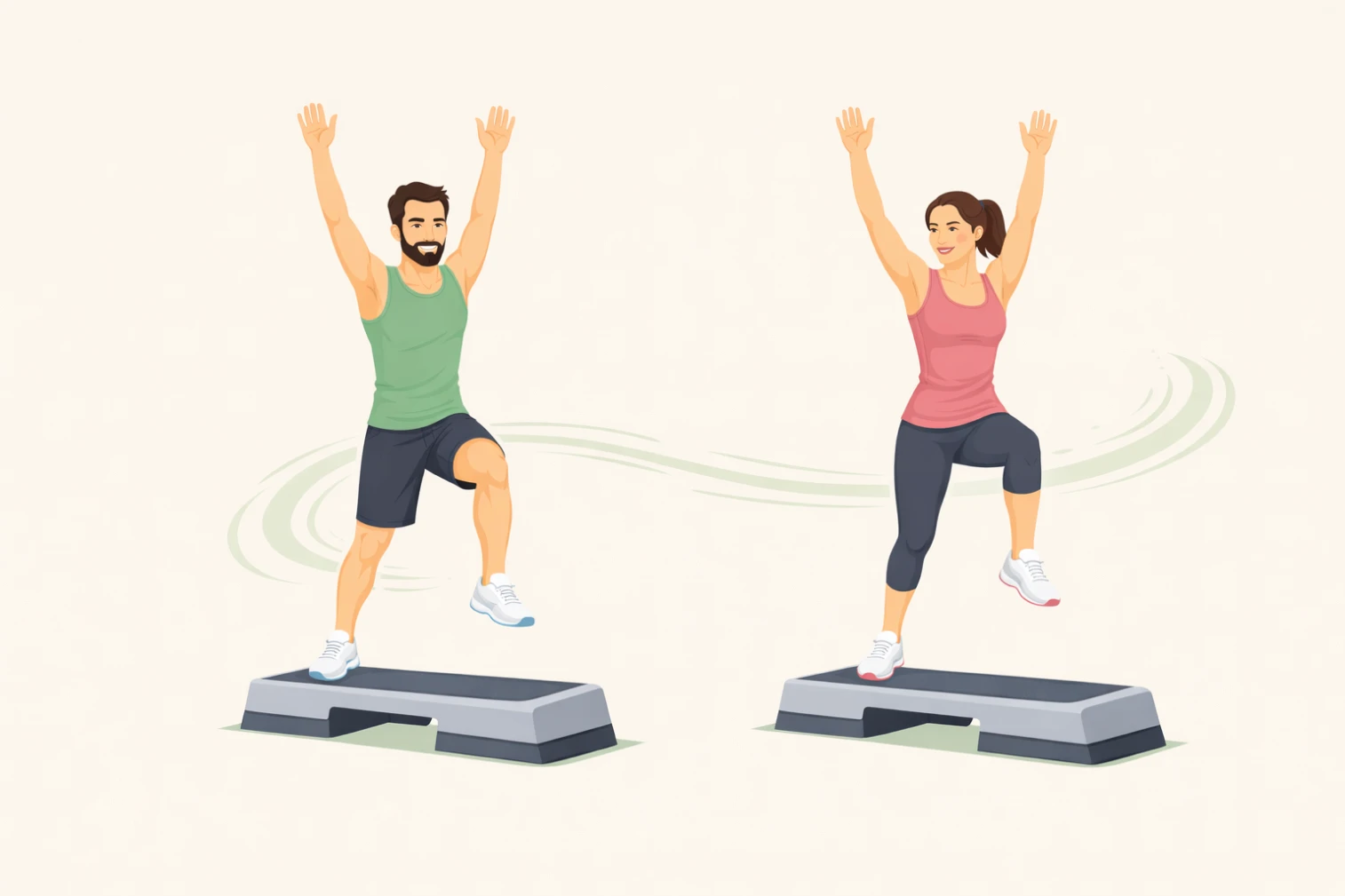
What Is Step Aerobics? Benefits, Basics, and Getting Started
Learn what step aerobics is, the benefits, and how to begin step workouts at home.
Feb 5, 2026
What Is Step Aerobics? Benefits, Basics, and Getting Started
Learn what step aerobics is, the benefits, and how to begin step workouts at home.
Feb 5, 2026
Step aerobics is a form of rhythmic, low-impact exercise that uses a raised platform to create simple stepping patterns.
Originally popular for its cardiovascular benefits, step aerobics has evolved into a flexible, feel-good way to build energy, coordination, and confidence through movement.
Rather than being about speed or intensity, step aerobics can be adapted to suit different bodies, moods, and energy levels — making it a surprisingly sustainable way to move at home.
What is step aerobics?
At its core, step aerobics involves stepping up and down from a platform in time with a steady rhythm.
Movements are often simple and repetitive, allowing the body to build familiarity and flow rather than focusing on complexity.
During the workout, you'll be using all sections of the step block, going corner to corner, side to side and from behind to the front.
The aim is to keep moving, and if you lose the beat, you return to simply going up and down your step block and join in again when you're ready.
Step height, pace, and movement style can all be adjusted, which means step aerobics can feel gentle and grounding or more energetic and dynamic, depending on how it’s taught.
Overall, the height of the step block will increase the intensity of the workout.
However, in most cases this will be minimal, and you are better off starting with no raisers or just the block and building up to a higher step when you are more confident with your block.
Jumping straight to high raisers could lead to injury if the moves are not performed properly.
The benefits of step aerobics
Step aerobics supports both physical and mental wellbeing in a balanced way.
Some of the key benefits include:
Improved energy levels
Rhythmic stepping helps gently wake up the body by encouraging circulation and steady movement. Rather than relying on intensity or speed, step aerobics builds energy gradually, which can feel more sustainable and less draining. Many people find this kind of movement helps them feel more alert and grounded, especially when energy feels low or sluggish.Better coordination and balance
Repeating step patterns allows the body to develop familiarity and confidence over time. As movements become more predictable, coordination and balance naturally improve, helping you feel more stable and aware of how your body moves through space. This kind of repetition can be especially helpful for building trust in movement without overthinking each step.Cardiovascular support
Step aerobics can support heart health by gently raising the heart rate through continuous, low-impact movement. The steady pace encourages cardiovascular engagement without the jarring impact of high-intensity exercise, making it a more accessible option for those looking to support fitness in a calmer, joint-friendly way.Confidence through movement
Familiar rhythms and simple patterns can make movement feel more approachable and enjoyable. Over time, this consistency helps build confidence, not just in the movements themselves, but in your ability to return to exercise without hesitation. Step aerobics often feels less intimidating because there’s no pressure to perform — just space to move and find your rhythm.A mood lift
Like many forms of rhythmic exercise, step aerobics can have a positive effect on mood. The combination of movement, rhythm, and focus can help reduce feelings of stress and tension, while supporting a more settled and positive mindset. Even short sessions can offer a sense of release and reset, both physically and mentally.
Step aerobics is very mentally challenging, as well as physically, so ensure you take regular rests and water breaks when needed, to make sure your brain is working to the best it can and you're getting the most out of your workout.
Over time, the workouts will become easier mentally, and you'll be able to challenge yourself more with extra raisers or more advanced moves.
Is step aerobics suitable for beginners?
Yes — step aerobics can be very beginner-friendly when taught with a calm, supportive approach.
I'd suggest starting with a lower step height and simple patterns
This allows the body to adapt gradually as your confidence grows. The movement will become more fluid without needing to add intensity or pressure.
The key is choosing sessions that prioritise rhythm, clarity, and rest when needed, rather than speed or complexity.
What do you need to get started?
One of the benefits of step aerobics is how little equipment it requires.
To begin, you’ll need:
A step platform or sturdy raised surface
Comfortable clothing
Supportive trainers
Enough space to move safely
Many people start with very basic stepping patterns before building into longer or more flowing sessions.
If you do not have access to a step block, all of the workouts are able to be done on the floor to start with.
Instead of going up and down your step block, take this as a march, either on the spot or forward and backward.
The same applies for the different step moves, create a mental block in your head and any moves to the corners, move your body slightly left or right when performing the step.
Step aerobics at home
Practising step aerobics at home allows you to move at your own pace, in your own space. There’s no need to keep up with anyone else or follow rigid routines.
Home sessions make it easier to learn step aerobics, as you can pause the video when you need and repeat sections if you get lost.
You can practice at any time, go over moves you need additional help with until you feel confident with them and do them freely if you are someone who doesn't like a fitness class environment.
This flexibility is what helps step aerobics become something you can return to regularly, rather than something you feel you have to do.
A calmer approach to step aerobics
Step aerobics doesn’t have to be fast, intense, or performance-driven. When taught with awareness and intention, it can become a form of feel-good movement that supports both energy and ease.
Some days stepping might help lift your mood and focus. Other days, a gentler rhythm may be enough. Both are valid.
Closing reflection
Step aerobics is less about doing more, and more about moving with rhythm and intention.
Step when you need energy.
Flow when you need movement.
Breathe when you need calm.
Step aerobics is a form of rhythmic, low-impact exercise that uses a raised platform to create simple stepping patterns.
Originally popular for its cardiovascular benefits, step aerobics has evolved into a flexible, feel-good way to build energy, coordination, and confidence through movement.
Rather than being about speed or intensity, step aerobics can be adapted to suit different bodies, moods, and energy levels — making it a surprisingly sustainable way to move at home.
What is step aerobics?
At its core, step aerobics involves stepping up and down from a platform in time with a steady rhythm.
Movements are often simple and repetitive, allowing the body to build familiarity and flow rather than focusing on complexity.
During the workout, you'll be using all sections of the step block, going corner to corner, side to side and from behind to the front.
The aim is to keep moving, and if you lose the beat, you return to simply going up and down your step block and join in again when you're ready.
Step height, pace, and movement style can all be adjusted, which means step aerobics can feel gentle and grounding or more energetic and dynamic, depending on how it’s taught.
Overall, the height of the step block will increase the intensity of the workout.
However, in most cases this will be minimal, and you are better off starting with no raisers or just the block and building up to a higher step when you are more confident with your block.
Jumping straight to high raisers could lead to injury if the moves are not performed properly.
The benefits of step aerobics
Step aerobics supports both physical and mental wellbeing in a balanced way.
Some of the key benefits include:
Improved energy levels
Rhythmic stepping helps gently wake up the body by encouraging circulation and steady movement. Rather than relying on intensity or speed, step aerobics builds energy gradually, which can feel more sustainable and less draining. Many people find this kind of movement helps them feel more alert and grounded, especially when energy feels low or sluggish.Better coordination and balance
Repeating step patterns allows the body to develop familiarity and confidence over time. As movements become more predictable, coordination and balance naturally improve, helping you feel more stable and aware of how your body moves through space. This kind of repetition can be especially helpful for building trust in movement without overthinking each step.Cardiovascular support
Step aerobics can support heart health by gently raising the heart rate through continuous, low-impact movement. The steady pace encourages cardiovascular engagement without the jarring impact of high-intensity exercise, making it a more accessible option for those looking to support fitness in a calmer, joint-friendly way.Confidence through movement
Familiar rhythms and simple patterns can make movement feel more approachable and enjoyable. Over time, this consistency helps build confidence, not just in the movements themselves, but in your ability to return to exercise without hesitation. Step aerobics often feels less intimidating because there’s no pressure to perform — just space to move and find your rhythm.A mood lift
Like many forms of rhythmic exercise, step aerobics can have a positive effect on mood. The combination of movement, rhythm, and focus can help reduce feelings of stress and tension, while supporting a more settled and positive mindset. Even short sessions can offer a sense of release and reset, both physically and mentally.
Step aerobics is very mentally challenging, as well as physically, so ensure you take regular rests and water breaks when needed, to make sure your brain is working to the best it can and you're getting the most out of your workout.
Over time, the workouts will become easier mentally, and you'll be able to challenge yourself more with extra raisers or more advanced moves.
Is step aerobics suitable for beginners?
Yes — step aerobics can be very beginner-friendly when taught with a calm, supportive approach.
I'd suggest starting with a lower step height and simple patterns
This allows the body to adapt gradually as your confidence grows. The movement will become more fluid without needing to add intensity or pressure.
The key is choosing sessions that prioritise rhythm, clarity, and rest when needed, rather than speed or complexity.
What do you need to get started?
One of the benefits of step aerobics is how little equipment it requires.
To begin, you’ll need:
A step platform or sturdy raised surface
Comfortable clothing
Supportive trainers
Enough space to move safely
Many people start with very basic stepping patterns before building into longer or more flowing sessions.
If you do not have access to a step block, all of the workouts are able to be done on the floor to start with.
Instead of going up and down your step block, take this as a march, either on the spot or forward and backward.
The same applies for the different step moves, create a mental block in your head and any moves to the corners, move your body slightly left or right when performing the step.
Step aerobics at home
Practising step aerobics at home allows you to move at your own pace, in your own space. There’s no need to keep up with anyone else or follow rigid routines.
Home sessions make it easier to learn step aerobics, as you can pause the video when you need and repeat sections if you get lost.
You can practice at any time, go over moves you need additional help with until you feel confident with them and do them freely if you are someone who doesn't like a fitness class environment.
This flexibility is what helps step aerobics become something you can return to regularly, rather than something you feel you have to do.
A calmer approach to step aerobics
Step aerobics doesn’t have to be fast, intense, or performance-driven. When taught with awareness and intention, it can become a form of feel-good movement that supports both energy and ease.
Some days stepping might help lift your mood and focus. Other days, a gentler rhythm may be enough. Both are valid.
Closing reflection
Step aerobics is less about doing more, and more about moving with rhythm and intention.
Step when you need energy.
Flow when you need movement.
Breathe when you need calm.
Step aerobics is a form of rhythmic, low-impact exercise that uses a raised platform to create simple stepping patterns.
Originally popular for its cardiovascular benefits, step aerobics has evolved into a flexible, feel-good way to build energy, coordination, and confidence through movement.
Rather than being about speed or intensity, step aerobics can be adapted to suit different bodies, moods, and energy levels — making it a surprisingly sustainable way to move at home.
What is step aerobics?
At its core, step aerobics involves stepping up and down from a platform in time with a steady rhythm.
Movements are often simple and repetitive, allowing the body to build familiarity and flow rather than focusing on complexity.
During the workout, you'll be using all sections of the step block, going corner to corner, side to side and from behind to the front.
The aim is to keep moving, and if you lose the beat, you return to simply going up and down your step block and join in again when you're ready.
Step height, pace, and movement style can all be adjusted, which means step aerobics can feel gentle and grounding or more energetic and dynamic, depending on how it’s taught.
Overall, the height of the step block will increase the intensity of the workout.
However, in most cases this will be minimal, and you are better off starting with no raisers or just the block and building up to a higher step when you are more confident with your block.
Jumping straight to high raisers could lead to injury if the moves are not performed properly.
The benefits of step aerobics
Step aerobics supports both physical and mental wellbeing in a balanced way.
Some of the key benefits include:
Improved energy levels
Rhythmic stepping helps gently wake up the body by encouraging circulation and steady movement. Rather than relying on intensity or speed, step aerobics builds energy gradually, which can feel more sustainable and less draining. Many people find this kind of movement helps them feel more alert and grounded, especially when energy feels low or sluggish.Better coordination and balance
Repeating step patterns allows the body to develop familiarity and confidence over time. As movements become more predictable, coordination and balance naturally improve, helping you feel more stable and aware of how your body moves through space. This kind of repetition can be especially helpful for building trust in movement without overthinking each step.Cardiovascular support
Step aerobics can support heart health by gently raising the heart rate through continuous, low-impact movement. The steady pace encourages cardiovascular engagement without the jarring impact of high-intensity exercise, making it a more accessible option for those looking to support fitness in a calmer, joint-friendly way.Confidence through movement
Familiar rhythms and simple patterns can make movement feel more approachable and enjoyable. Over time, this consistency helps build confidence, not just in the movements themselves, but in your ability to return to exercise without hesitation. Step aerobics often feels less intimidating because there’s no pressure to perform — just space to move and find your rhythm.A mood lift
Like many forms of rhythmic exercise, step aerobics can have a positive effect on mood. The combination of movement, rhythm, and focus can help reduce feelings of stress and tension, while supporting a more settled and positive mindset. Even short sessions can offer a sense of release and reset, both physically and mentally.
Step aerobics is very mentally challenging, as well as physically, so ensure you take regular rests and water breaks when needed, to make sure your brain is working to the best it can and you're getting the most out of your workout.
Over time, the workouts will become easier mentally, and you'll be able to challenge yourself more with extra raisers or more advanced moves.
Is step aerobics suitable for beginners?
Yes — step aerobics can be very beginner-friendly when taught with a calm, supportive approach.
I'd suggest starting with a lower step height and simple patterns
This allows the body to adapt gradually as your confidence grows. The movement will become more fluid without needing to add intensity or pressure.
The key is choosing sessions that prioritise rhythm, clarity, and rest when needed, rather than speed or complexity.
What do you need to get started?
One of the benefits of step aerobics is how little equipment it requires.
To begin, you’ll need:
A step platform or sturdy raised surface
Comfortable clothing
Supportive trainers
Enough space to move safely
Many people start with very basic stepping patterns before building into longer or more flowing sessions.
If you do not have access to a step block, all of the workouts are able to be done on the floor to start with.
Instead of going up and down your step block, take this as a march, either on the spot or forward and backward.
The same applies for the different step moves, create a mental block in your head and any moves to the corners, move your body slightly left or right when performing the step.
Step aerobics at home
Practising step aerobics at home allows you to move at your own pace, in your own space. There’s no need to keep up with anyone else or follow rigid routines.
Home sessions make it easier to learn step aerobics, as you can pause the video when you need and repeat sections if you get lost.
You can practice at any time, go over moves you need additional help with until you feel confident with them and do them freely if you are someone who doesn't like a fitness class environment.
This flexibility is what helps step aerobics become something you can return to regularly, rather than something you feel you have to do.
A calmer approach to step aerobics
Step aerobics doesn’t have to be fast, intense, or performance-driven. When taught with awareness and intention, it can become a form of feel-good movement that supports both energy and ease.
Some days stepping might help lift your mood and focus. Other days, a gentler rhythm may be enough. Both are valid.
Closing reflection
Step aerobics is less about doing more, and more about moving with rhythm and intention.
Step when you need energy.
Flow when you need movement.
Breathe when you need calm.
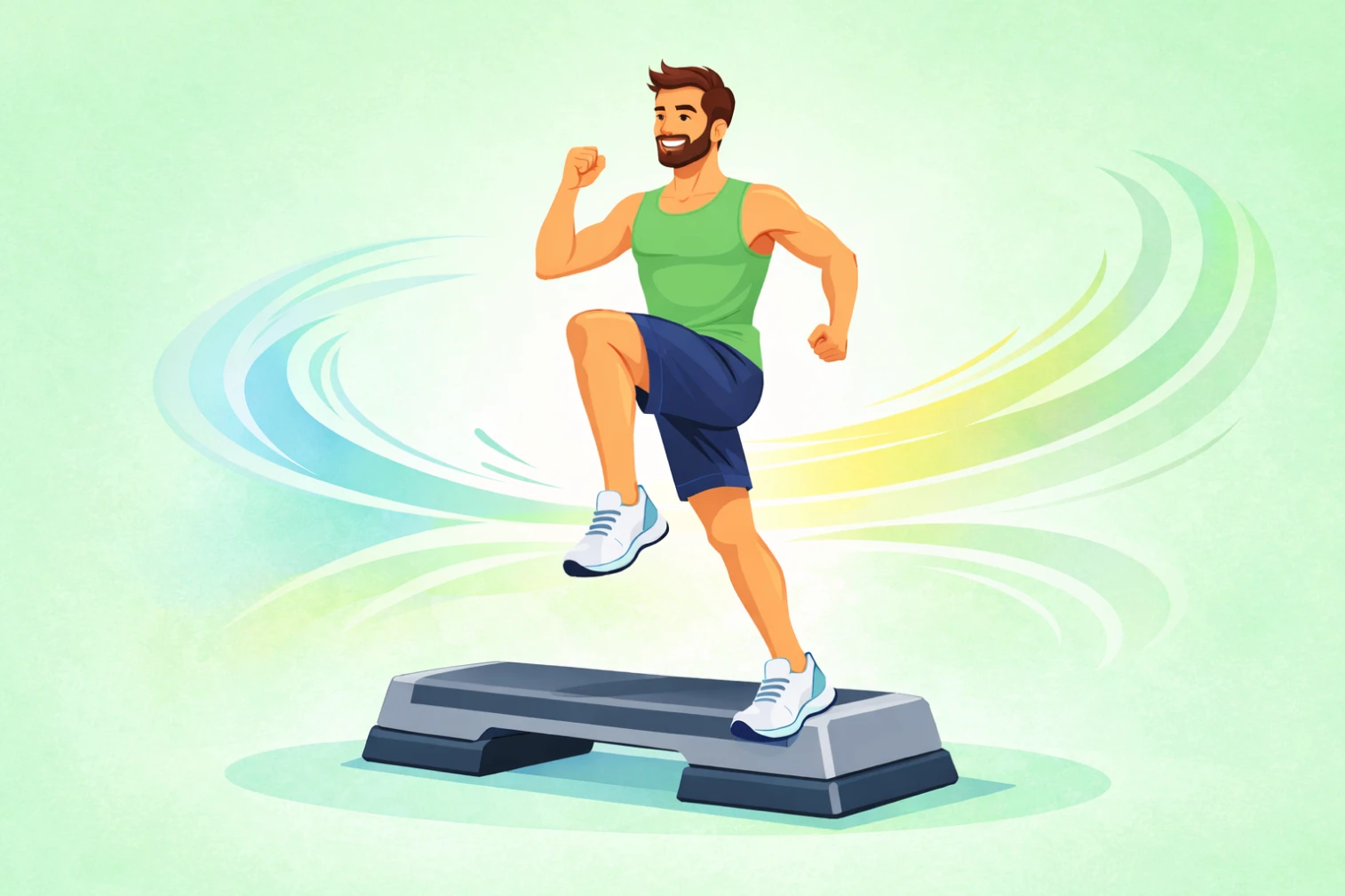
How Step Aerobics Improves Cardio, Coordination and Strength
Learn how step aerobics improves cardio, coordination, and strength with an effective workout.
How to Start Meditating: A Gentle Introduction
A gentle meditation practice focused on breath, stillness, and creating space to slow down.
Yoga for Beginners: Benefits, Basics, and Getting Started
A gentle introduction to yoga for beginners, covering the basics and how to get started.
How Step Aerobics Improves Cardio, Coordination and Strength
Learn how step aerobics improves cardio, coordination, and strength with an effective workout.
How to Start Meditating: A Gentle Introduction
A gentle meditation practice focused on breath, stillness, and creating space to slow down.
Yoga for Beginners: Benefits, Basics, and Getting Started
A gentle introduction to yoga for beginners, covering the basics and how to get started.
YouTube

Classes on YouTube
Motivating step aerobics, grounding yoga, and calming meditation — shared on YouTube to support energy, movement, and calm in everyday life. A growing collection of sessions you can return to whenever it feels right.
YouTube
Classes on YouTube
Motivating step aerobics, grounding yoga, and calming meditation — shared on YouTube to support energy, movement, and calm in everyday life. A growing collection of sessions you can return to whenever it feels right.
YouTube
Classes on YouTube
Motivating step aerobics, grounding yoga, and calming meditation — shared on YouTube to support energy, movement, and calm in everyday life. A growing collection of sessions you can return to whenever it feels right.
© 2026 Step & Flow. All rights reserved.
© 2026 Step & Flow. All rights reserved.
© 2026 Step & Flow. All rights reserved.